Arctic (Malonny 4)
Arctic This impressive size mural symbolizes the melting of glaciers,…
Comments Off on Arctic (Malonny 4)
2020-12-20

Arctic This impressive size mural symbolizes the melting of glaciers,…
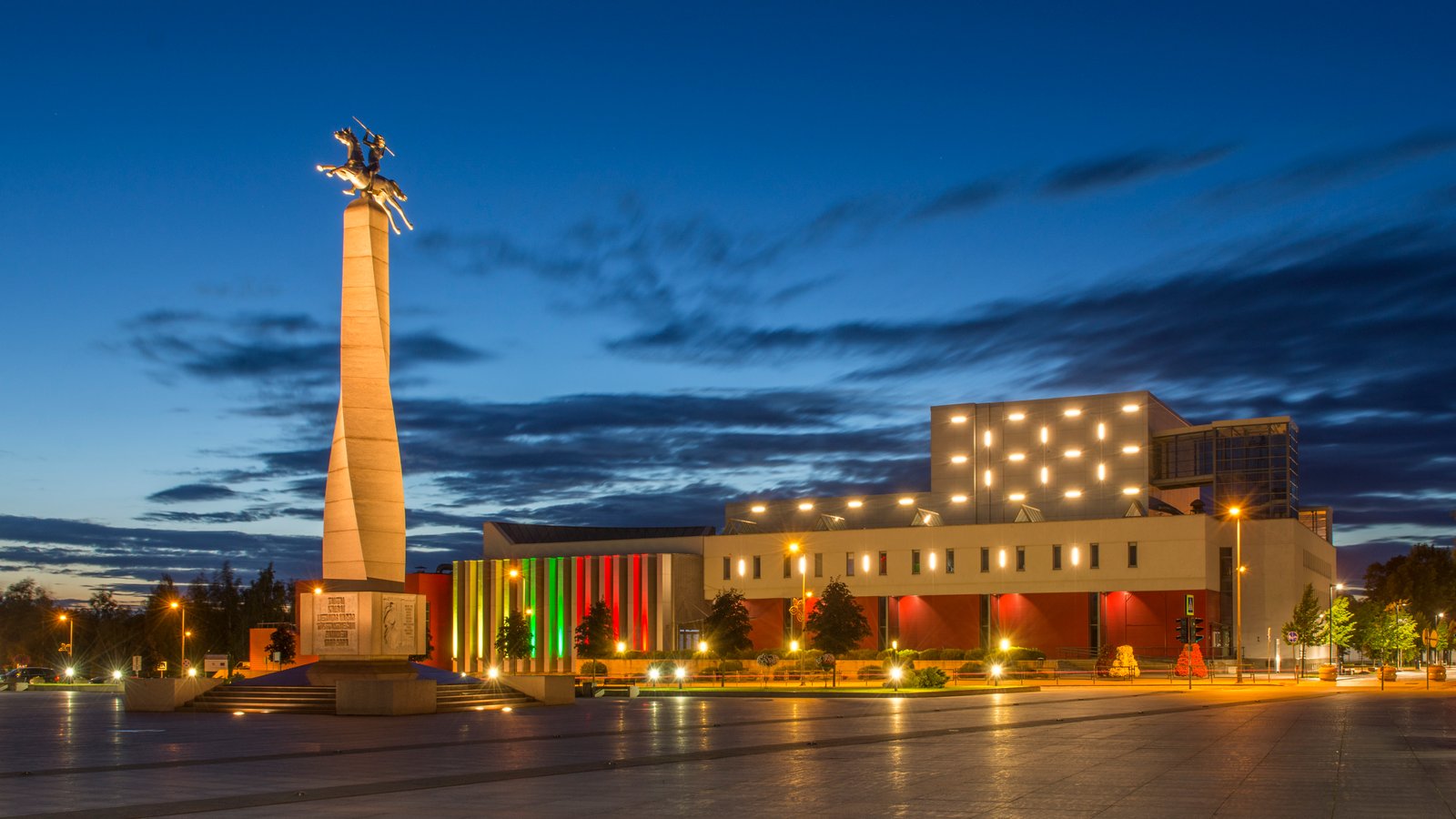
Light Installation in the City Center The artist Ray Bartkus…

Saint George slaying the dragon, a reinterpreted Christian legend, is an iconography that is recognized throughout the City of Marijampole. This same symbol has been used by Rastafarian artist Neville Garrick depicting Reggae legend Bob Marley as an Ethiopian St. George. This apparent metaphor for good conquering evil is shared from Lithuania to Ethiopia and Jamaica. Additionally, the Rastafarian movement uses the Ethiopian flag's color sequences as their own color symbols. Interestingly the same flag colors, albeit different color sequence is that of Lithuania's. It is these coincidental elements that brought forth the conversation depicted by Elysée's mural.
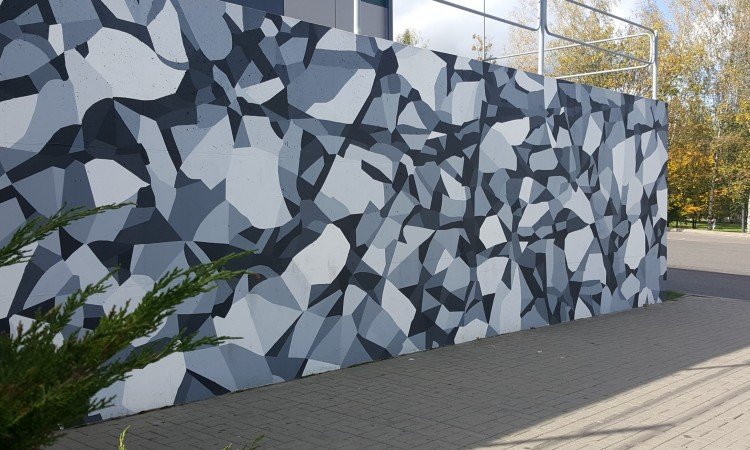
This wall painting is based on a piece of crumpled paper. Many Tints of grey, black and white match facets in the damaged paper. The pattern resembles a cross-section of granite or other crystalline rock, the starting point is something quite fragile. A crumpled piece of paper is usually thrown away, considered a failure. But often mistakes can open up new pathways. The „wrong” way may turn out to be much more interesting than the original, intended destination. The damage done to a piece of paper is irreversible, therefore it's impossible to make it smooth again once it's been crumpled. Similarly, other forms of damage, psychological, historical or geological, may also be impossible to repair; they remain hidden while at the same time giving shape to the visible landscape.

The metal birds are waiting for a sunny day while hanging out on top of the fence. You can see shadows as the sun reaches them and creates an illusion that they are actually hanging on the branch.
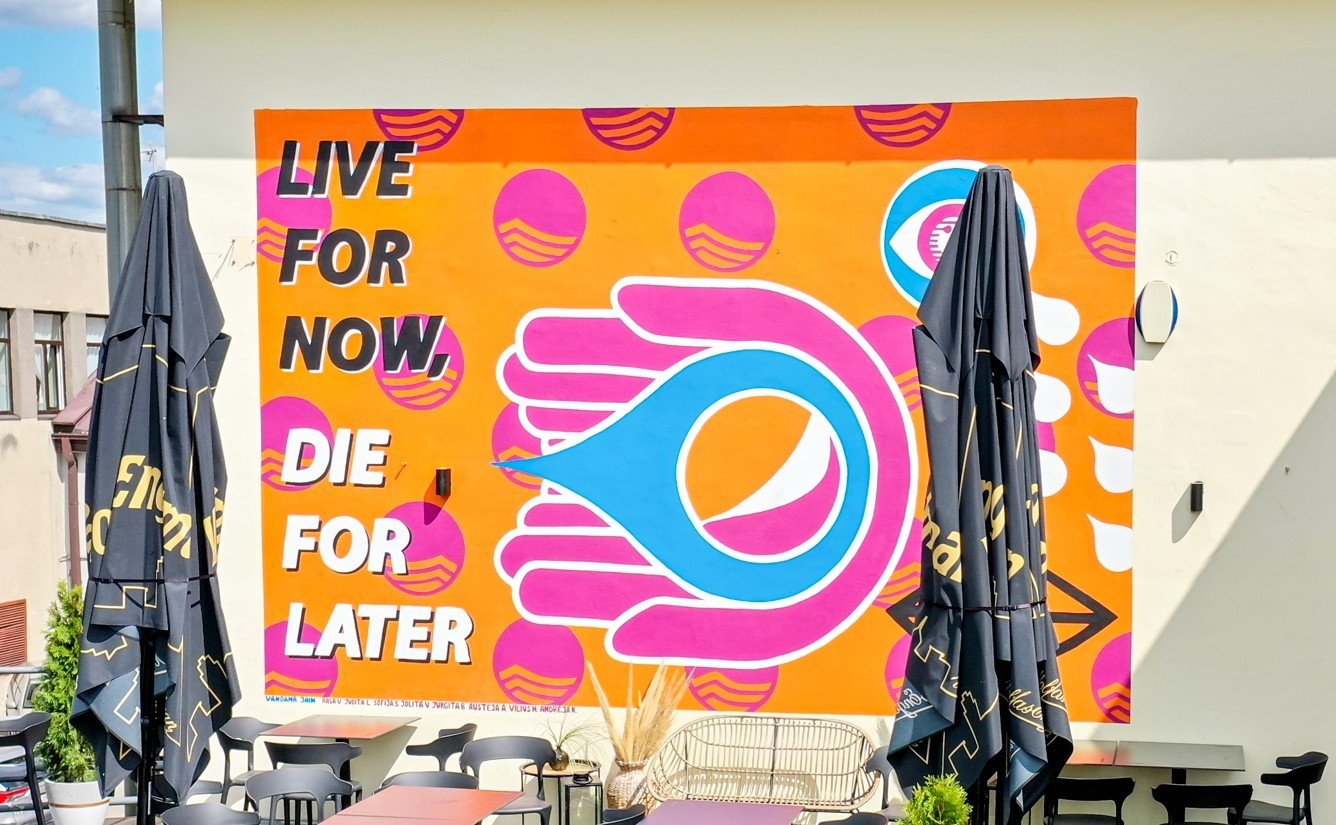
Live For Now, Die For Later Art The painting is like…

These three different murals show us the main problem and trend at the moment. People see the world through their smart devices, where reality is reflected through video cameras attached to their heads. The author encourage us to start making changes in our life.
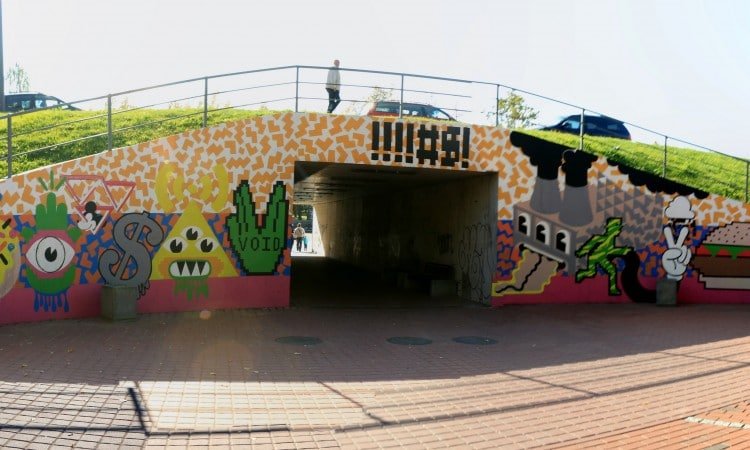
Philip Grisewood is an illustrator who uses various techniques created by the artist through the years experimenting with different textures and methods of the media. This art work is dedicated to consumerism - the painting is a symbol of fast food, permanently busy lives, not seeing what's going on around, urban pollution and environmental damage. The English term "VOID" is highlighted as in this mural its' meaning is emptiness, vacuum, nothing. The place is chosen to symbolize the transition at the gates of a consumer life, to a completely different world - is a bridge to an art oasis, calmness and different culture.

Artist Ray Bartkus created a ”Floating World” mural on the wall of the Marijampolė Old Dam building. The mural is drawn upside down, the real perspective can only be seen in the reflection of water. Depending on weather conditions, the reflection is rippled or clear, and sometimes disappears completely. The Artist expects that each time passerby will find something new. This piece of art is like a life - different every time.

The initial approach was to utilize the building's shape when developing the artist concept . They had a lot of fun sketching potential ideas, and ultimately landed on an umbrella raining from inside. The umbrella is made of the artists' favorite food, Pizza. The portal takes them back to their home State of Ohio, and provides a look at the local sea monster "Bessie", who lives in Lake Erie. The Mountains are there to keep a an eye on the land below and provide some nice scenery for the wonderful people of Marijampole.